Be a Better Grower Newsletter
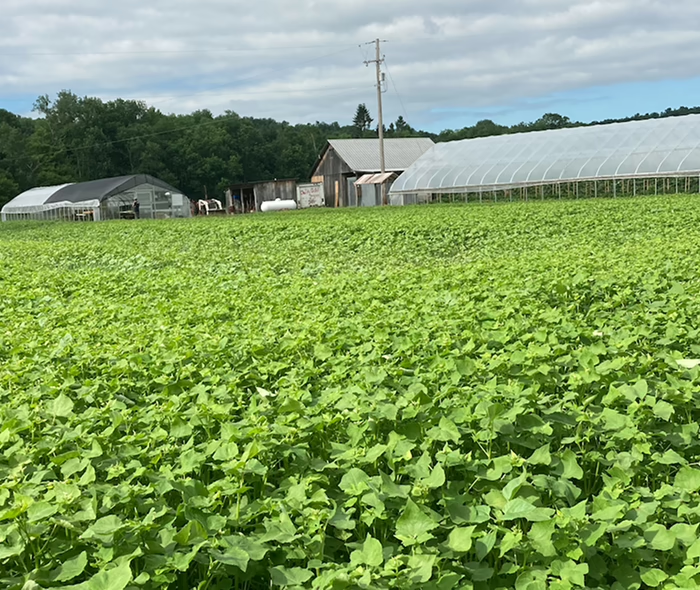
A stand of Buckwheat cover crop
Growing season has arrived, and for many in farming, that means it’s time for soil amendments. Let’s zoom out for a moment to consider the big picture: your farm’s fertility and how your inputs make the journey from source to soil.
Gardens, farms, and enterprises of all sizes require nutrient cycling to produce robust, resilient crops. As organic growers, we understand the importance of strategic moves towards boosting the overall health of soil as a means to reduce reliance on pesticides and herbicides. And since we’ve committed to avoiding zapping our plants with soil synthetic fertilizers, we’re often more mindful—and sometimes even required—to be more selective about our inputs than conventional operations.
Indeed, indigenous growing practices, which form the basis for the framework of regenerative agriculture, take this principle further, by centering ecosystem dynamics and closed-loop systems. As a useful parallel, forested habitats thrive when nutrients are balanced and ecological niches are filled. In contrast, fragmented or disrupted ecosystems tend to leach nutrients and are much more vulnerable to pest and disease pressure.
The contemporary paradigm of easy solutions leans on quick online orders and pricey plastic-jug amendments. These inputs may offer an NPK boost, but in reality, many inputs travel long distances, rely on extractive sourcing, and may not offer the most sustainable path to long-term soil health and a well-rounded soil profile. Fortunately, there are many on-farm fertility solutions that are both low-cost and highly effective at improving your soil’s biological, physical, and chemical properties. Today, we’re highlighting one pathway of many to working with on-site organic inputs towards a sustainable, closed-loop system with soil health at its center.
On-Farm Fertility at Freedom Food Farm
At Freedom Food Farm in Raynham, Massachusetts, farmer Chuck Currie is adamant about locking various nutrients into his farm. After the sale of his produce, just about every material output has a place on the farm – prunings, clippings, leaves, animal manure, you name it, it’s staying on site! These materials are full of nutrients and with careful rotations and successions, is to return it all to the soil.
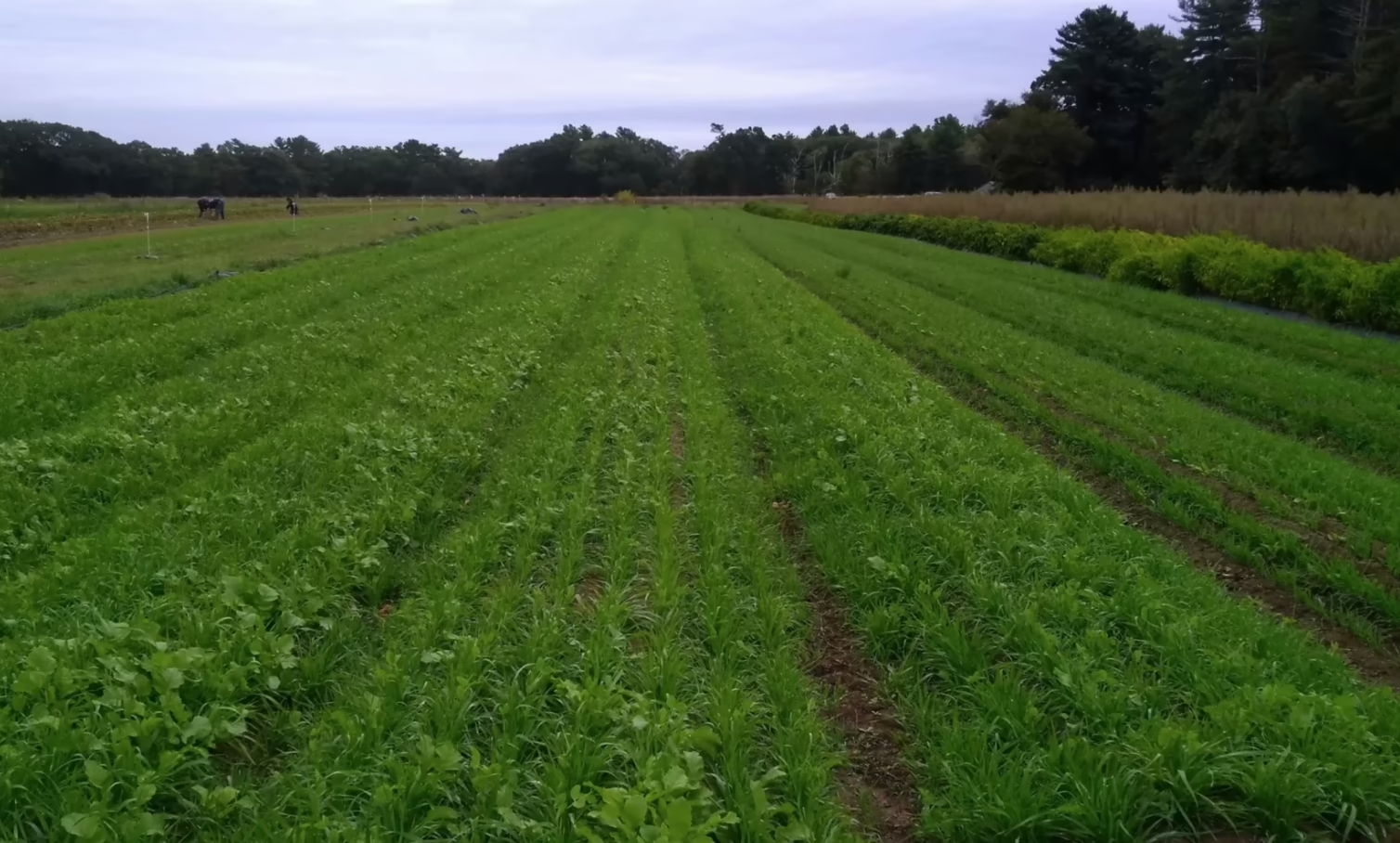
Oats and peas cover crop with garlic planted in between at Freedom Food Farm
Freedom Food Farm is also dedicated to cover cropping their fields to produce more biological material, a practice that enriches soil and provides sustenance for beneficial soil microbes. In fact, all of these elements have been baked into FFF’s Organic Systems Plan, or OSP, a record that certified organic farmers are required to keep from year to year. Not only do OSP’s outline which growing methods meet organic standards, but their use helps farmers keep track of farm plans at a level of detail that’s critical for maintaining a balanced ecology. Learn more about Chuck’s on-farm fertility plans in this webinar.
NOFA/Mass Can Help You Lock in Your Farm’s Fertility!
All farms are working within their context, scale and historical growing conditions. With the multitude of ways we can enhance our soil, our team can help guide you in a direction that’s right for your farm.
If you operate a farm business and are interested in transitioning to organic, the Transition to Organic Partnership Program (TOPP) hosts many free education events on soil health. Farmers can sign up for TOPP and get matched with an experienced, certified organic farmer who will work with you to further develop your organic practices. Read more about TOPP, and how seasoned organic inspector Laura Davis can assist you with your OSP.