Be a Better Grower Newsletter
By: Hannah McDonald
Find Mireyas’ story in the summer issue of The Natural Farmer!
When you join NOFA/Mass as a member, you’ll receive The Natural Farmer, a quarterly organic and regenerative farming magazine for the Northeast.
Join here for Farm / Business membership
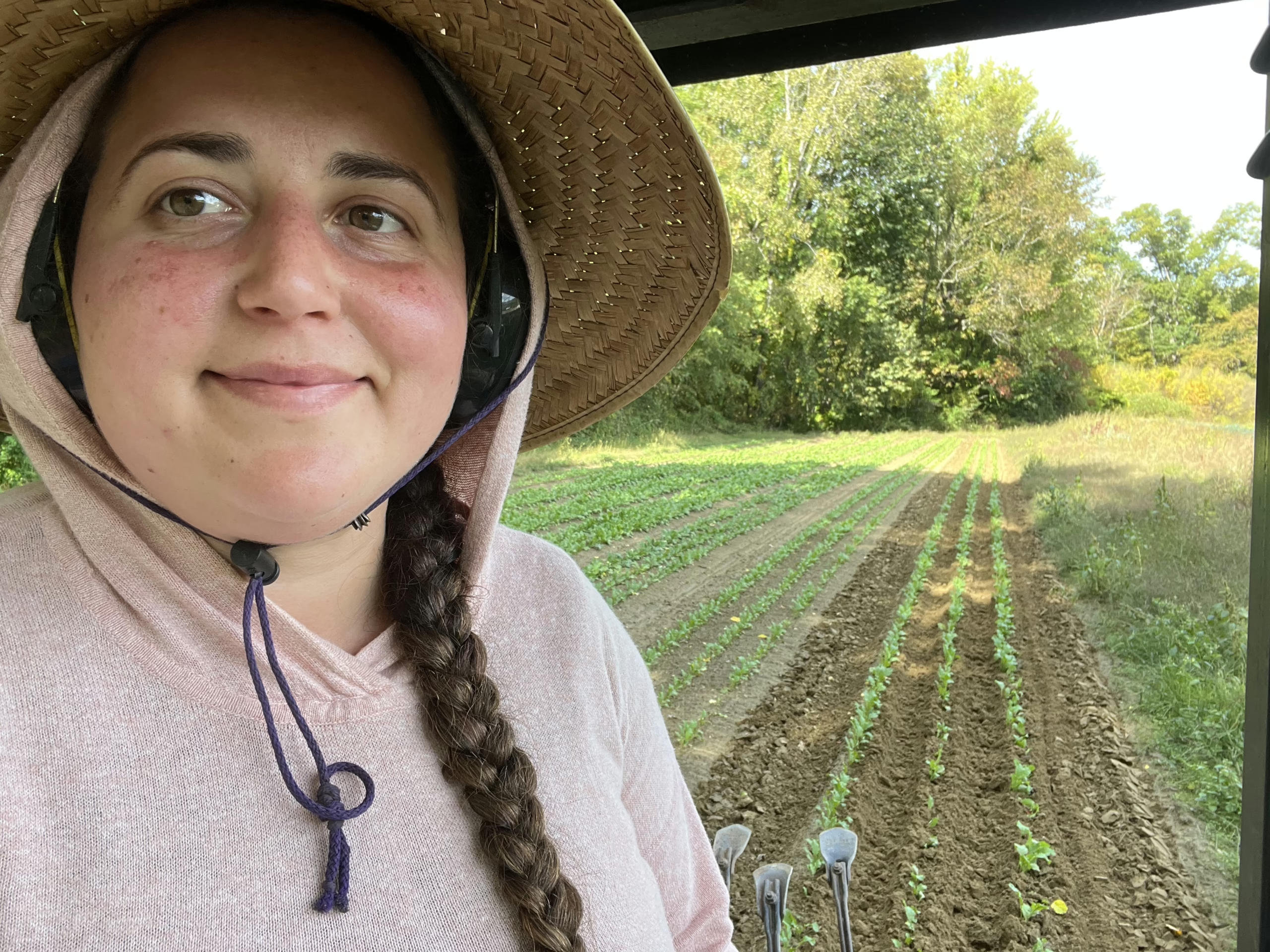
Mireya, originally from Greece, is the farm manager at Red Fire Farm
No one in my life embodies the often-unseen labor of women farmers more than my longtime friend and neighbor, Mireya Genius, and I wanted to know more about her work. On a recent spring day, I asked Mireya how she got into farming, and her story took me to a small village in Crete.
Mireya’s family arrived on the island when she was young, and she found herself surrounded by olive trees and vineyards. “We had chickens, geese, ducks, goats… Being the older kid, I was more involved with taking care of them.” Her family grew food and made olive oil. Care came naturally – practical, instinctive.
Coming to the U.S. changed things. “In Greece, I couldn’t drive a tractor,” she told me. “I was tired of fighting that battle.” In Massachusetts, she found something different. “My voice, my skills, my experiences mattered. It didn’t matter if I knew or didn’t, just that I wanted to. That liberated me.”
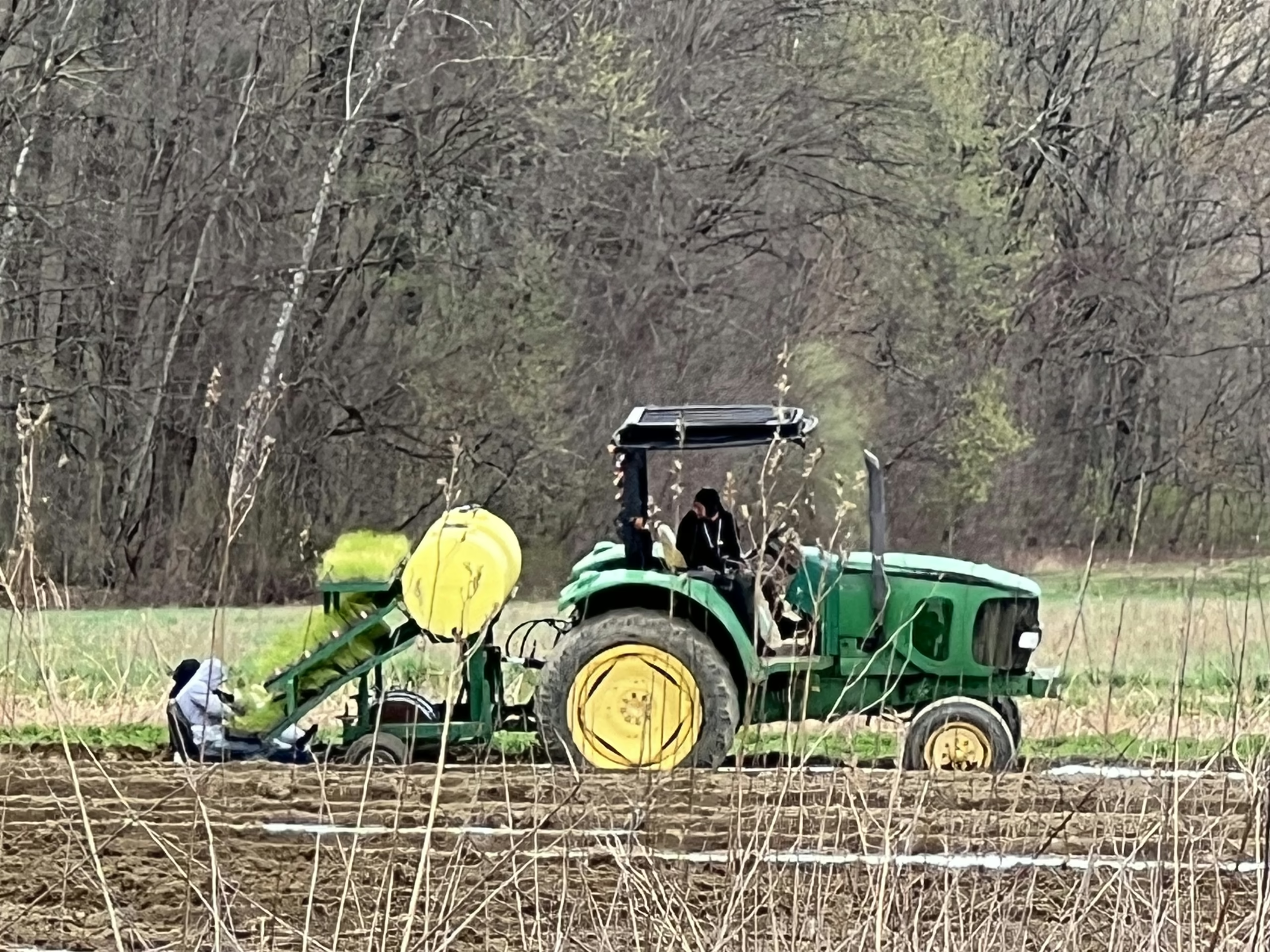
Tractor work is one of multiple skills, many much more interpersonal that Mireya brings to her role
Today, Mireya works at Red Fire Farm, a large, diversified organic farm in Massachusetts, where her role resists a simple label. She manages flow: of information, labor, timing, and people. It’s constant coordination across crews, moving between fields, greenhouses, and packing sheds. It’s work that rarely appears on a crop plan, but everything depends on it.
“I sometimes feel like everyone’s mom at the farm,” she said laughing. “There are days I just talk and walk all day,” she said. “Sometimes I’d rather be weeding.”
One Saturday she was called in on a day she wasn’t scheduled to work. The owner was sick, it was a big planting day, and the crew was behind. A young woman who had been there since she was 17 came to mind. Mireya had helped her get her driver’s license and recently asked if she wanted to try operating a tractor.
That day, Mireya trained her to lead. “I was so fulfilled,” she said. “Even though I needed to rest.” Later, the young woman told her to take a day off and worry less. Mireya smiled, tears in her eyes. “I’m empowering people to be independent.”
What keeps her farming isn’t just the land or the food, it’s the people. Across farms, much of what holds systems together isn’t always named or measured. It lives in relationships, attention, and quiet decisions that shape each day. In Mireya’s work, that connective tissue stretches across fields, people, and seasons.
Mireya Katerina Tsironis Genius is from Greece, and is the Farm Manager at Red Fire Farm in Montague, MA. Hannah McDonald, the Events Manager at NOFA/Mass, holds an MS in Sustainable Food Systems, and focuses on building connections across the food system.
A monthly column for growers’ wisdom: Start your Tomatoes off right
from Richard Robinson
Tomato growers! You need patience, good soil, and a good cutworm collar
As the weather warms, the gardener’s thoughts turn to… tomatoes! I’ve found three things to be essential for getting my crop off to a good start.
1. Patience! If you are planting tomatoes outside, try not to rush them into the ground. Tomatoes do best in warm soil, and will simply sit and wait until they get it. Cold soil will also induce “transplant shock”, stunting growth and prematurely converting them to floral, rather than vegetative growth, leading to small plants with too few leaves to support their fruit. Late May is usually safe, and the first week of June is not too late. If you have hoops and row cover, you can get them in the ground a week or so earlier, as long as there are no late frosts in the forecast.
2. Good soil! Soil that is high in organic matter is best for tomatoes, as for just about every plant. Compost is your friend here. Nitrogen is important at planting time, to promote vigorous foliage growth. Gardeners are often warned that too much nitrogen will promote vegetative rather than floral growth, and this is true, but it’s mostly applicable for chemical sources of nitrogen, or concentrated organic sources such as cow or chicken manure. A good organic nitrogen, such as seed meal or feather meal, will be slowly released and avoid this problem. And a bit of quick-release nitrogen, such as blood meal, is a benefit.
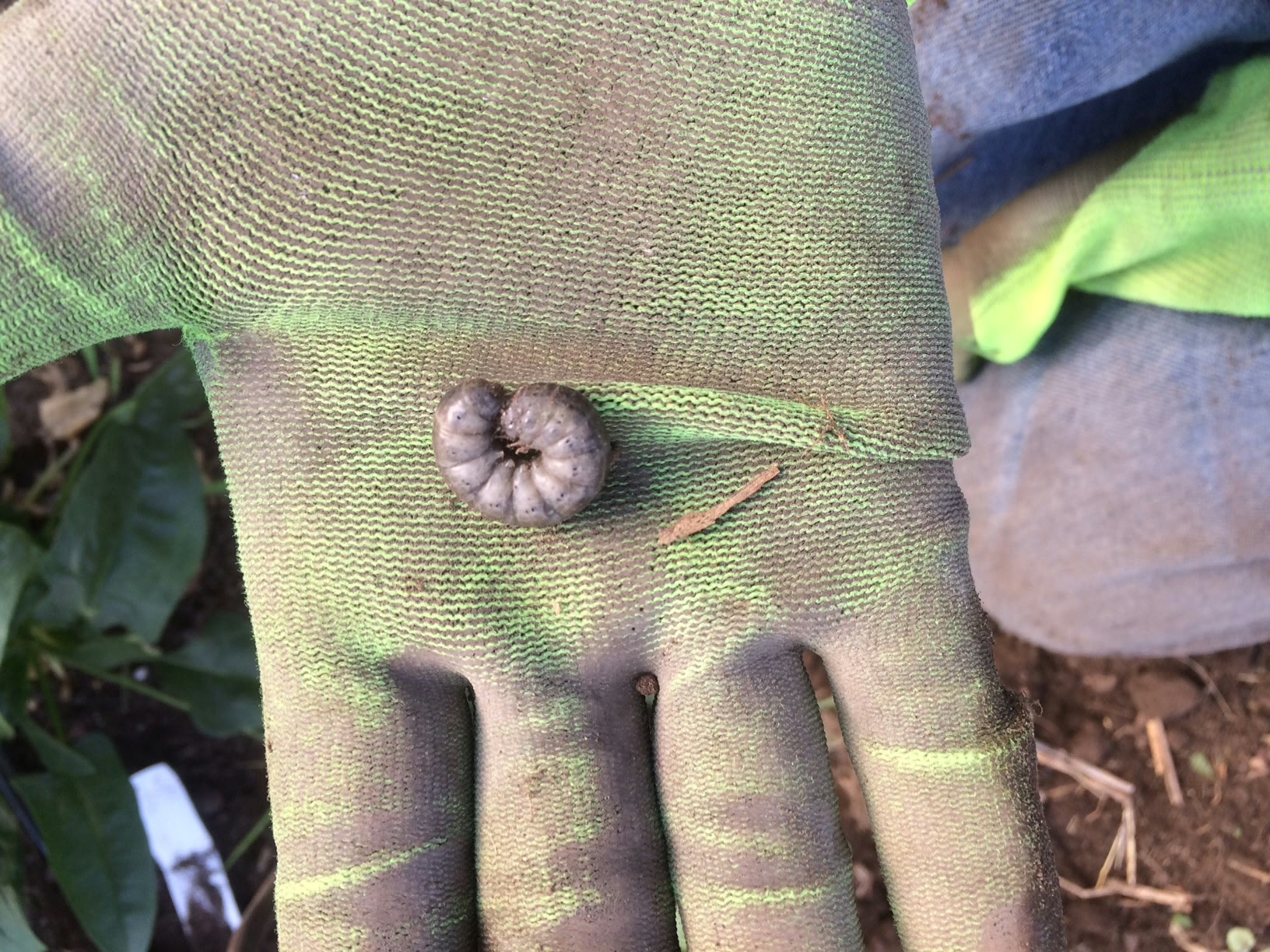
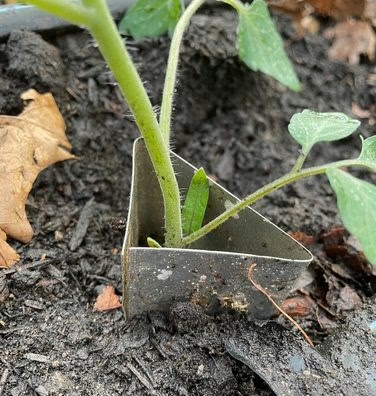
3. Cutworm collars! Cutworms, litter-dwelling moth larvae, encircle and decapitate young tomatoes. Cutworm collars can be made out of lots of different materials, but for my money, aluminum flashing from a local home improvement store is by far the best option. Cut strips 2” x 6,” and fold twice to make a triangular collar that slips on easily and lasts forever.