
Soil Health Assessment
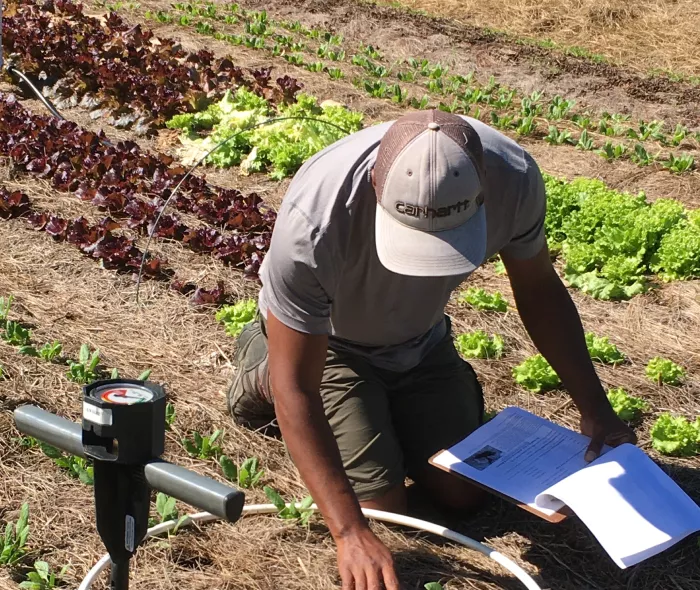
Includes:
- Site visit by a NOFA/Mass Technical Assistance Provider
- A comprehensive set of tests that provide an assessment of biodiversity and biological activity in the soil
- Analysis of what the test results mean in terms of your soil health and relative carbon levels
- Recommendations tailored to your site including production goals, management needs, and amendments to add
About this service
We’ll visit your site to perform a full series of field tests that assess your soil’s condition. After the visit, we’ll provide a detailed report that includes test results, analysis of your soil health and carbon levels, and customized recommendations based on your site, soil health indicators, and goals.
The Soil Health Assessment, also known as ‘Soil Carbon Proxy Tests’ use quantitative and qualitative metrics to give an overall assessment of the biodiversity and biological activity in the soil, which can be used as a proxy to assess soil carbon levels. These tests will give you an idea of how well your soils are supporting life and storing carbon. These tests will provide some indicators of soil health, offering the land steward a snapshot of the tested area and recommendations for improving soil health. Repeated annual or biennial tests will provide information about change over time, allowing the land steward to see the impact of their growing practices on soil health outcomes.
Next steps
- Complete the Soil Services Request Form and submit it
- Note the number of samples on the form if you are requesting more than one (pricing is per sample)
- A NOFA/Mass Technical Assistance Provider will contact you to schedule a site visit
- A NOFA/Mass Technical Assistance Provider will conduct the Soil Health Assessment alongside you during the scheduled site visit
- A report, analysis and recommendations will be sent to you following the site visit
Why we recommend this service
Healthy soils are living soils–soil life is made of carbon and stores carbon. Diverse soil organisms use carbon to form their bodies and to form complex carbon molecules that create pores and support diverse habitats in the soil. Soil organisms build their own habitats and participate in communities with plants, they manage nutrients, water, and carbon in the soil, buffer against drought and flooding rains, and keep plants healthy and all life more resilient. The greater the health and diversity of life in the soil, the more carbon it will hold and the more resilient our land systems will be in weather extremes.
These tests will
- Help you get an idea of how well your soils are supporting life and storing carbon
- Provide an analysis of what the data means in terms of your soil health and relative carbon levels, as well as recommendations tailored to your site, results, and goals
- Gain knowledge about the land you’re growing on
Tests that make up the Soil Health Assessment (Soil Carbon Proxy Tests)
- Soil Surface Biology (30” Observation hoop) field test
- Earthworm Count and Biopores field test
- Soil Texture and Visual Aggregation Assessment field test
- Soil Hardness field test
- Water Infiltration field test
- Bulk Density field test
- Slake Test for Aggregate Stability field test
See a detailed breakdown of each test in the Soil Carbon Analysis Manual
Questions? Email soilhealth@nofamass.dreamhosters.com