
Soil Food Web Analysis
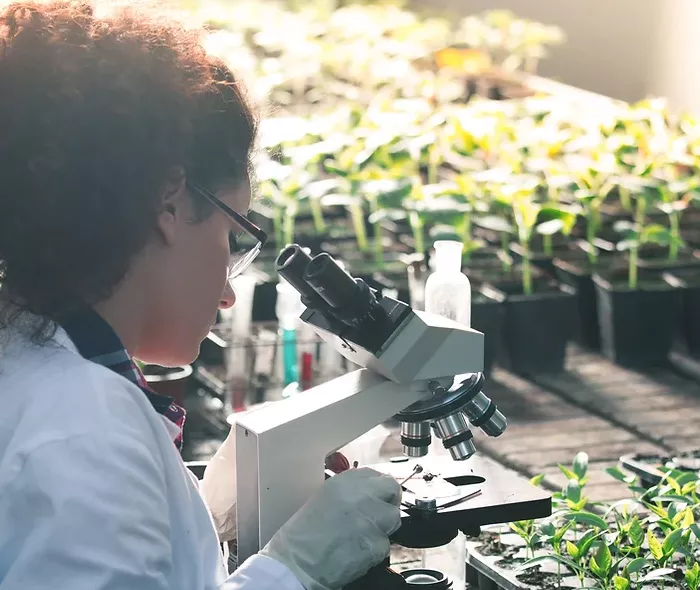
Includes:
- Consultation with a Technical Assistance Provider
- Shadowing microscopy test of your soil
- Soil report with biomass count of trophic levels of concern and statistical evaluation
- Analysis of results that will give an understanding of which stage of succession your soil is, as well as the ideal organism counts you need predicated upon the crops you intend to grow
Price is per soil sample
About this service
Is your soil biologically ready to support the crops you want to grow?
Our Soil Food Web Analysis helps you answer that question using microscopy. This test uses a compound microscope and a standardized method called shadowing microscopy to examine soil or compost samples. We provide:
- A quantitative report with biomass counts of key microbial groups:
Bacteria, Fungi, Protozoa, and Nematodes - A statistical analysis of these results
- A clear interpretation of your soil’s successional stage
- Target benchmarks based on the crops you plan to grow
Assessments are available for
- Soil
- Compost
Each has slightly different sampling instructions.
Step-by-step sampling collection guide
Note: Compost is often used as a microbial inoculant. But before applying it—especially in teas or extracts—make sure it has the right biology.
Sample test report and analysis
Next steps
- Complete the Soil Services Request Form and submit it
- Note the number of samples on the form if you are submitting more than one (pricing is per sample)
- Note if you will be testing soil or compost
- A NOFA/Mass Technical Assistance Provider will contact you to help determine the best way to get your sample to us (mail or in-person)
Step-by-step sampling collection guide
- Once received, NOFA/Mass will prepare a custom analysis including a full report, expert interpretation, and tailored recommendations based on your crops and goals
Why we recommend this service
Microbes are the foundation of soil health.
A diverse and balanced soil microbiome:
- Decomposes organic matter, making nutrients plant-available
- Builds soil structure and improves water retention
- Protects plants from soil-borne pathogens
- Boosts crop vigor and resilience
- Links directly to human nutrition through healthier, more nutrient-dense food
- Supports broader environmental functions like carbon sequestration and water purification
Healthy soil biology can improve:
- Soil structure
- Water infiltration and retention
- Nutrient cycling and availability
This test doesn’t just show you what’s in your soil—it shows you whether your soil is on the right biological trajectory for your growing goals.
Questions? Email soilhealth@nofamass.dreamhosters.com