Be a Better Grower Newsletter
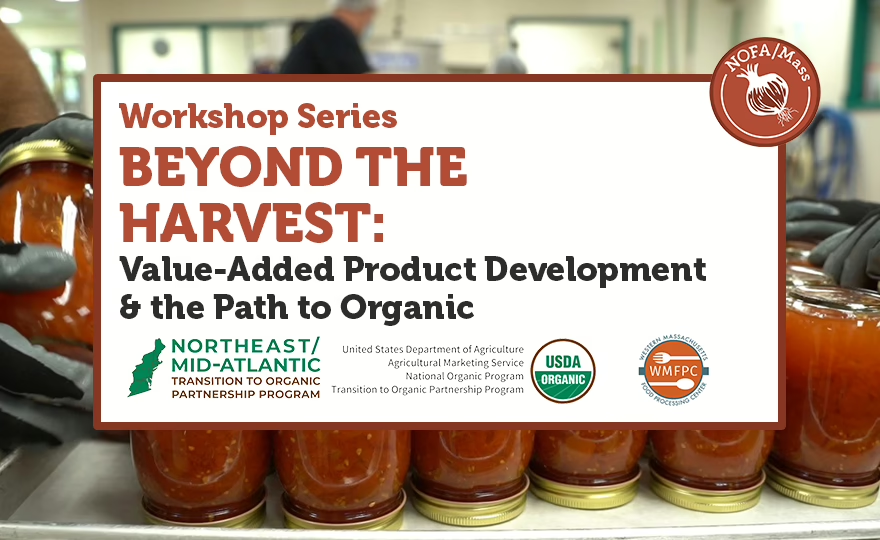
Have you ever considered taking your harvest bounty and preserving it? Perhaps even selling value-added foods to customers? The Western Massachusetts Food Processing Center (WMFPC) helps develop products that can preserve farm-grown abundance and enhance farm profitability.
The Transition to Organic Partnership Program (TOPP), a USDA National Organic Program, has sponsored many on-farm events, farmer mentorships and organic practice technical assistance over the last three years. For the first time in March, through TOPP, we hosted a 4-part webinar developed and presented by the Western Mass Food Processing Center, called Beyond the Harvest, which is now available on our Youtube channel.
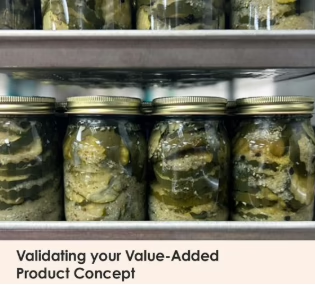

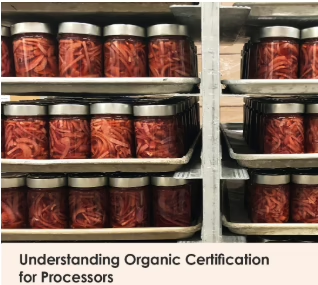
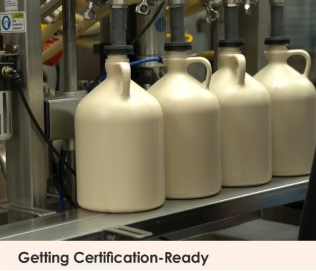
The Beyond the Harvest series takes viewers and participants on a step-by-step walk-through of preparing to bring organic food processing ideas into motion (with each session lasting 90 minutes):
-
Value-Added Product Development & the Path to Organic
-
Manufacturing & Regulatory Compliance
-
Understanding Organic Certification for Processors
-
Getting Certification Ready
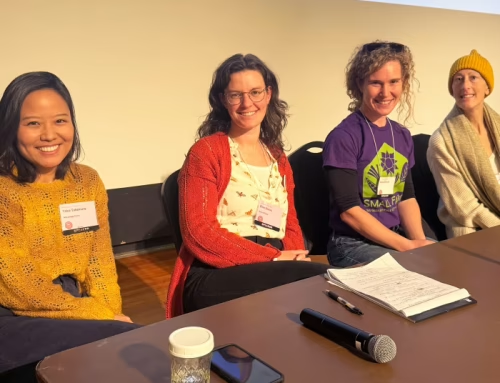
Western MA Food Processing Center’s Kate Minifie, Farm & Food Products Program Director, and Liz Buxton, Director of Operations, make a great team, each presenting two of the four workshops. There’s a great deal to learn about using certified-organic ingredients in a product with a USDA Organic logo, and these sessions provide indispensable information.
Grow Potatoes the Easy Way
A thick cover of leaves means no digging, no hilling, easy harvest, and happy potatoes
By Richard Robinson, Hopestill Farm, Sherborn, MA
Not too long after I started growing potatoes, I almost gave up on them. By harvest time, my potato beds would be thick with weeds. Digging them from the soil was unpleasant and tedious work, and I cursed every time my digging fork impaled another tuber. I vowed to find a better way. And I did, and now I love growing and harvesting potatoes, and they have become a moneymaker here at Hopestill Farm. Here’s how I grow them:
In the spring, I clear any mulch off the bed, exposing bare soil. I place my seed potatoes directly on the soil—no digging required—about a foot apart (some folks report no loss of yield with a two-foot spacing; my limited trials have been inconclusive, but I remain intrigued). If I want to add soil amendments or nitrogen, I do it at this stage.
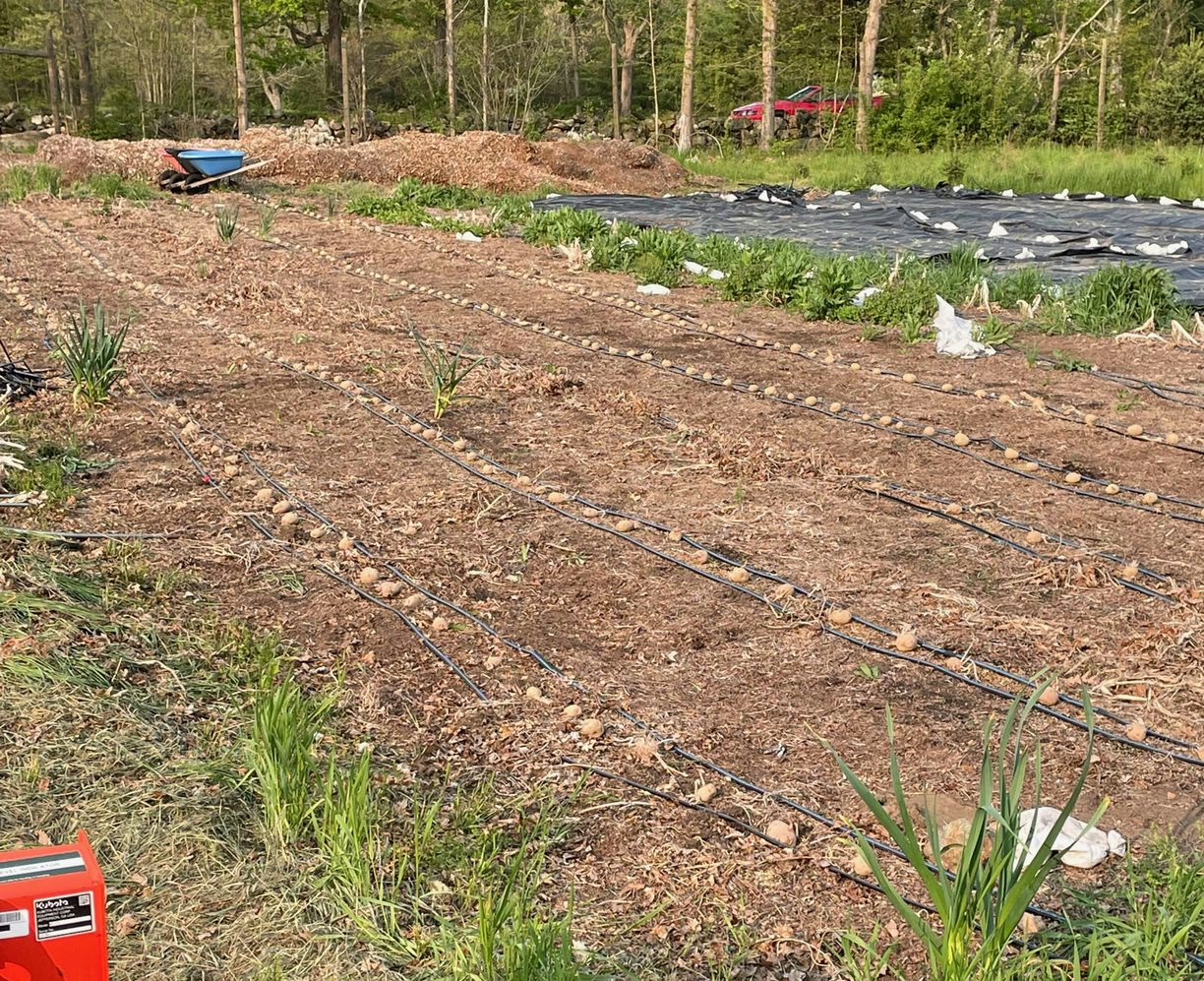
Then, and here’s the important part, I cover the entire bed with a foot or more of leaves. The tubers will sprout, sending roots down into the soil, and sending shoots up through the leaves. Sometimes my covering is as much as two feet (I haven’t yet found a depth of leaves they can’t get through), but that’s a bit too deep for easy harvest.
When grown this way, no hilling is required. The leaves will slowly compress, and I occasionally rake leaves from the paths back onto the beds if the layer seems a bit thin, but this is rare. More importantly, with the action of the soil life below them, they slowly break down, providing a slow-release fertilizer throughout the growing season.
By harvest time, I usually have a five- or six-inch layer of leaves left on top of the potatoes (this is reliably true for short-season varieties like Dark Red Norland; for varieties that take longer, I start with more leaves and rake up a bit before the crowns grow together and impede that).
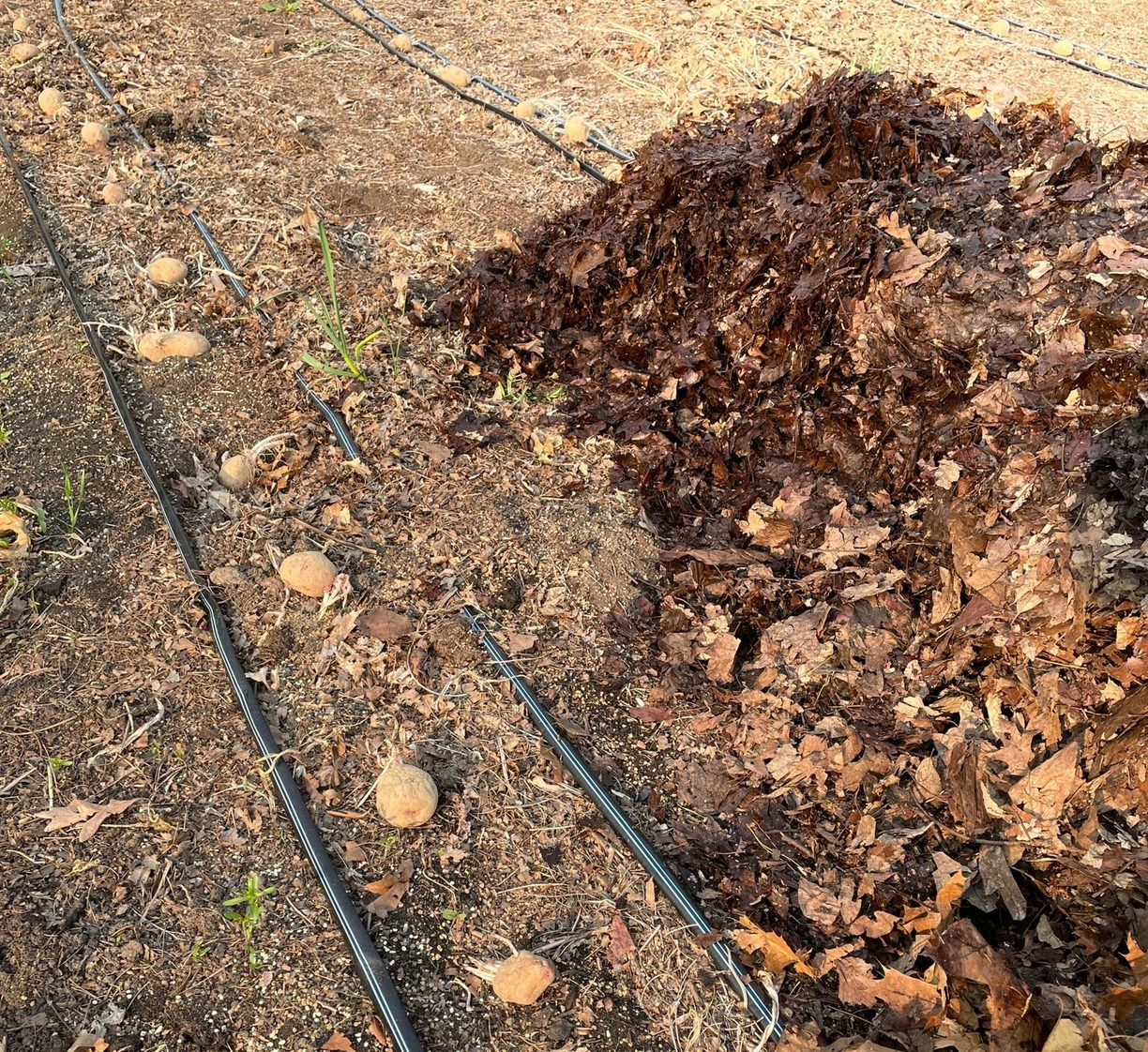
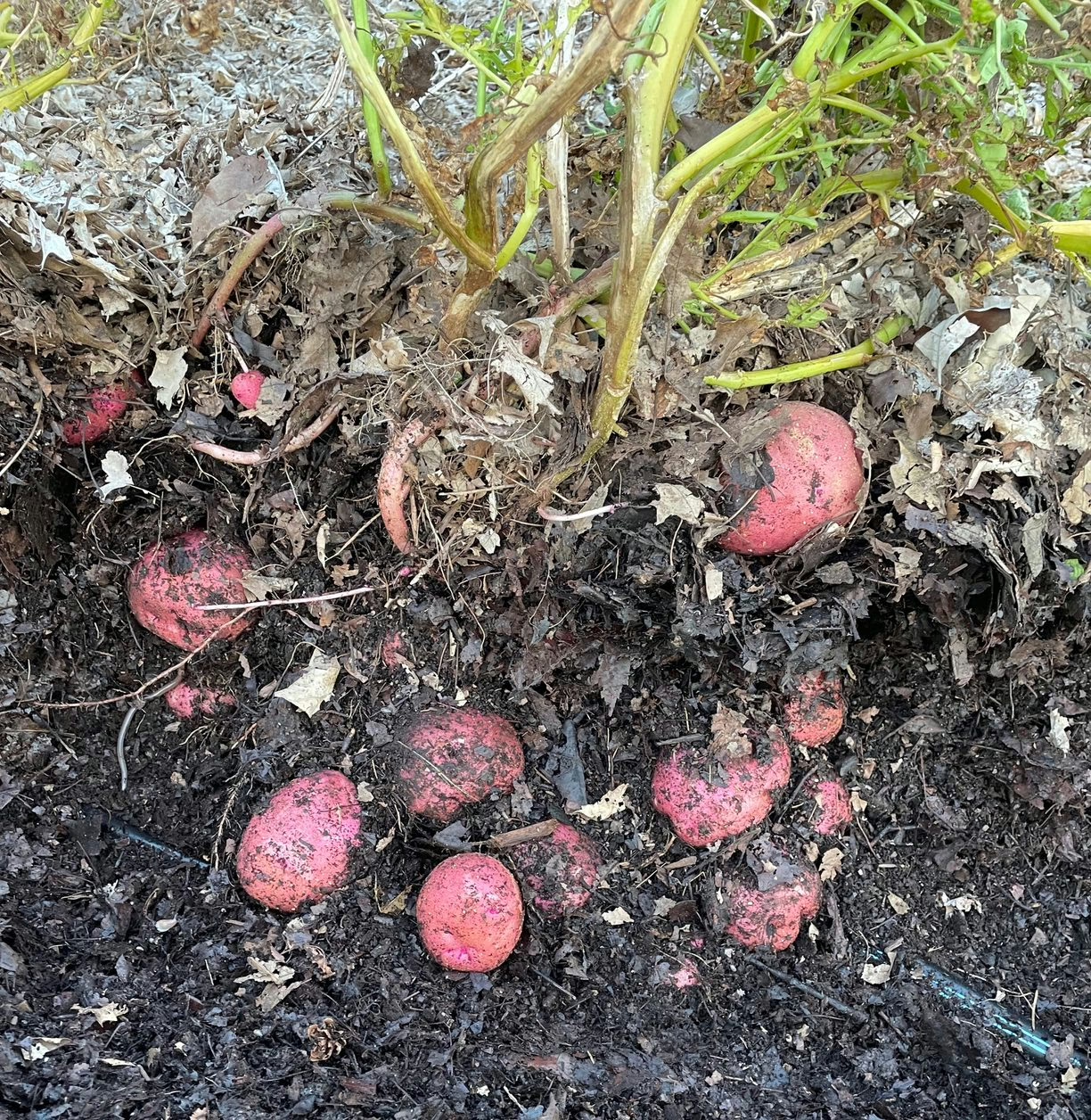
To harvest, I get down on my knees and push the leaves aside. Almost all of the potatoes are right there, at the leaf-soil interface, and the rest are down only an inch or two, easy to find and harvest by hand. This may be slower than a fully tractor-driven harvest, but it is far easier and faster and more fun than hand digging, the usual alternative on smaller farms.
If you don’t have a regular supplier of leaves, start talking to landscapers, who gather them by the truckload in the fall and have to pay to get rid of them. Find one who understands your need for leaves unmixed with lawn or garden clippings, which are likely to contain pesticide or herbicide residues. Almost any kind of leaves will do, including oak and pine needles. Black walnut leaves only show up rarely, in my experience, but should be avoided, due to the release of a compound called juglone, which can hinder plant growth.