Policy & Advocacy Newsletter
Last summer, a small group of advocates waited for more than four hours in a packed State House hearing room to request that the legislature earmark $5.5 million for healthy soils grants in the Environmental Bond Bill. Advocacy efforts for this initiative were ongoing for several years, and have continued following the hearing. And now, the fruits of those efforts are coming to bear! The Environmental Bond Bill was passed in the Senate on April 15th and included the $5.5 million earmark we requested for healthy soils grants!
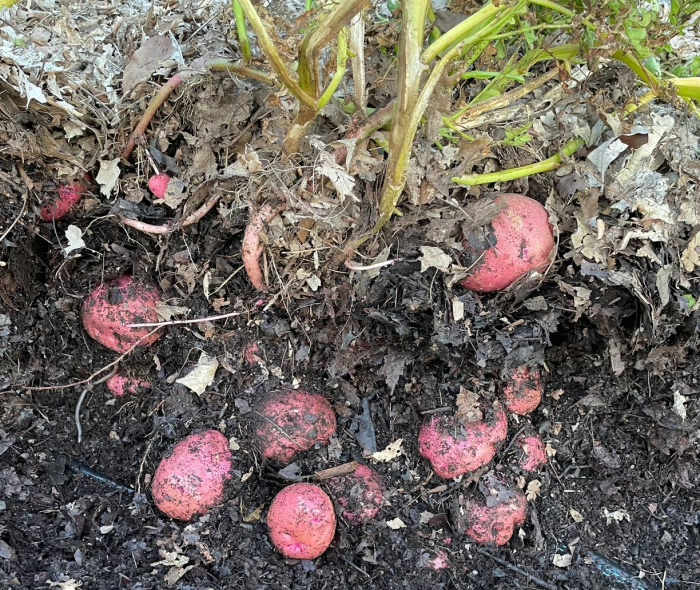
This investment would enable roughly 110 farms to adopt regenerative practices like cover cropping and no-till, sequestering over 7,000 metric tons of CO2 and reducing agricultural runoff by more than 6 billion gallons annually. It would also empower the continued effort to implement soil health projects on the Commonwealth’s non-agricultural land, such as forests, wetlands, and ornamental or recreational landscapes, which play a large role in cultivating healthy soils as well.
As a refresher, the Environmental Bond Bill (also known as the Mass Ready Act) is an omnibus bill that authorizes the state to borrow money through bonds to fund long-term investments in natural resource protection, climate resilience, and environmental programs. These omnibus bills typically reappear every few years and set aside funding for a vast array of projects and programs, many of which, including the Healthy Soils Initiative, are under the management of the Executive Office of Energy and Environmental Affairs (EEA) and the Massachusetts Department of Agricultural Resources (MDAR).
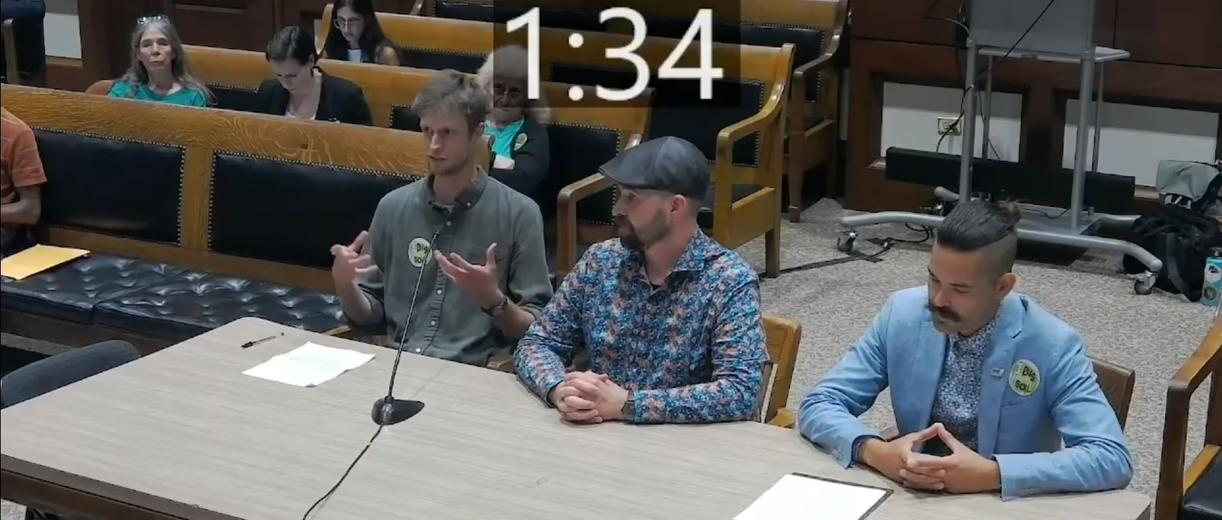
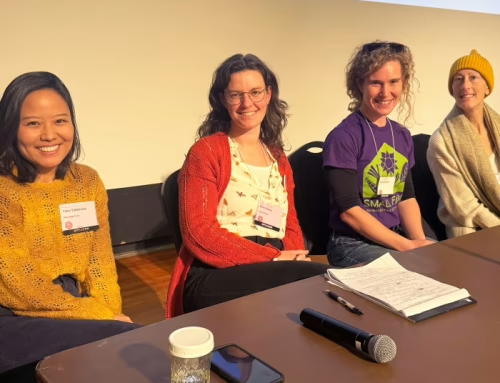
From left to right: NOFA/Mass Policy Coordinator; Randy Violette, Conservation Programs Manager at Hampden-Hampshire Conservation District (HHCD); Matthew Karas, and NOFA/Mass Senior Policy Advisor; Dago Driggs, addressing committee members last summer at the State House in support of healthy soils grant funding.
The Environmental Bond Bill is one of these unique pieces of legislation that is guaranteed to pass, much like a budget bill, so the debate is largely over what’s included. Therefore, it’s viewed by legislators and advocates as a great opportunity to add their legislative priorities as amendments. Hundreds of amendments were filed for the bill, including some of the key components of bills that NOFA/Mass has been supporting this session. The Environmental Bond Bill isn’t over the finish line just yet– it now moves to the House, where legislators will take it up sometime after they’re done with the FY27 budget. We’ll provide more updates on the healthy soils funding and other priorities in the bill as they materialize over the next couple months.
We would like to thank all of our partners who have worked tirelessly for the inclusion of soil health priorities in the Mass Ready Act. Special thanks go to the Massachusetts Food System Collaborative, the Hampden-Hampshire Conservation District (particularly Matthew Karas, who joined us in providing testimony last summer), the Healey-Driscoll Administration, the members of the Joint Committee on Environment and Natural Resources, and the farmers and our legislative champions who have been with us in the fight for a robust Healthy Soils Initiative for many years. This progress wouldn’t have been possible without all of your support!
Representing Organic Farmers in Washington
The NOFA/Mass Policy Team collaborates with various partners and coalitions to advocate for policies at both the state and federal level. One such group is the National Organic Coalition (NOC), which NOFA/Mass participates in as a member of the NOFA Interstate Council. NOC serves the interests of the entire organic sector, with member organizations that represent organic farmers, ranchers, certifiers, retailers, consumers, and more. The coalition advances organic food and agriculture and ensures a united voice for organic integrity while assuring that policies are fair, equitable, and encourage diversity of participation and access.
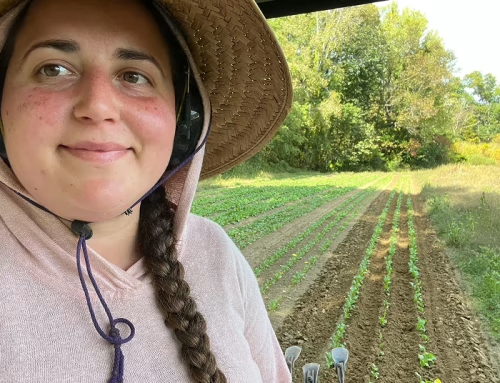
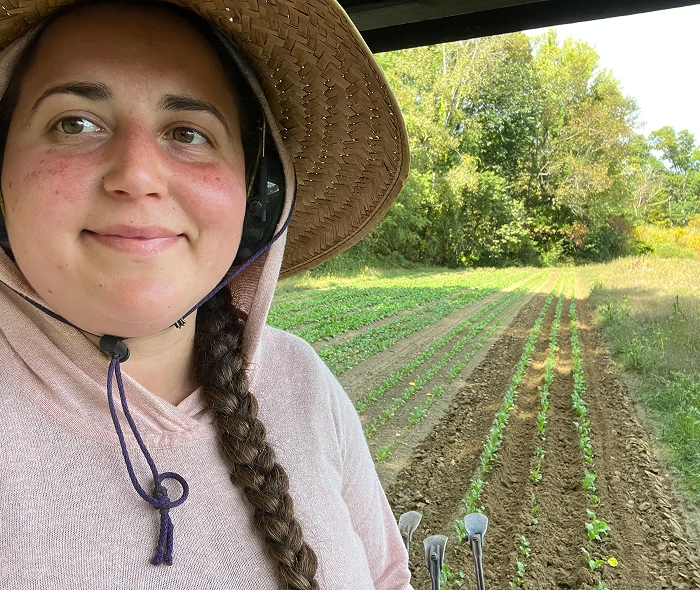
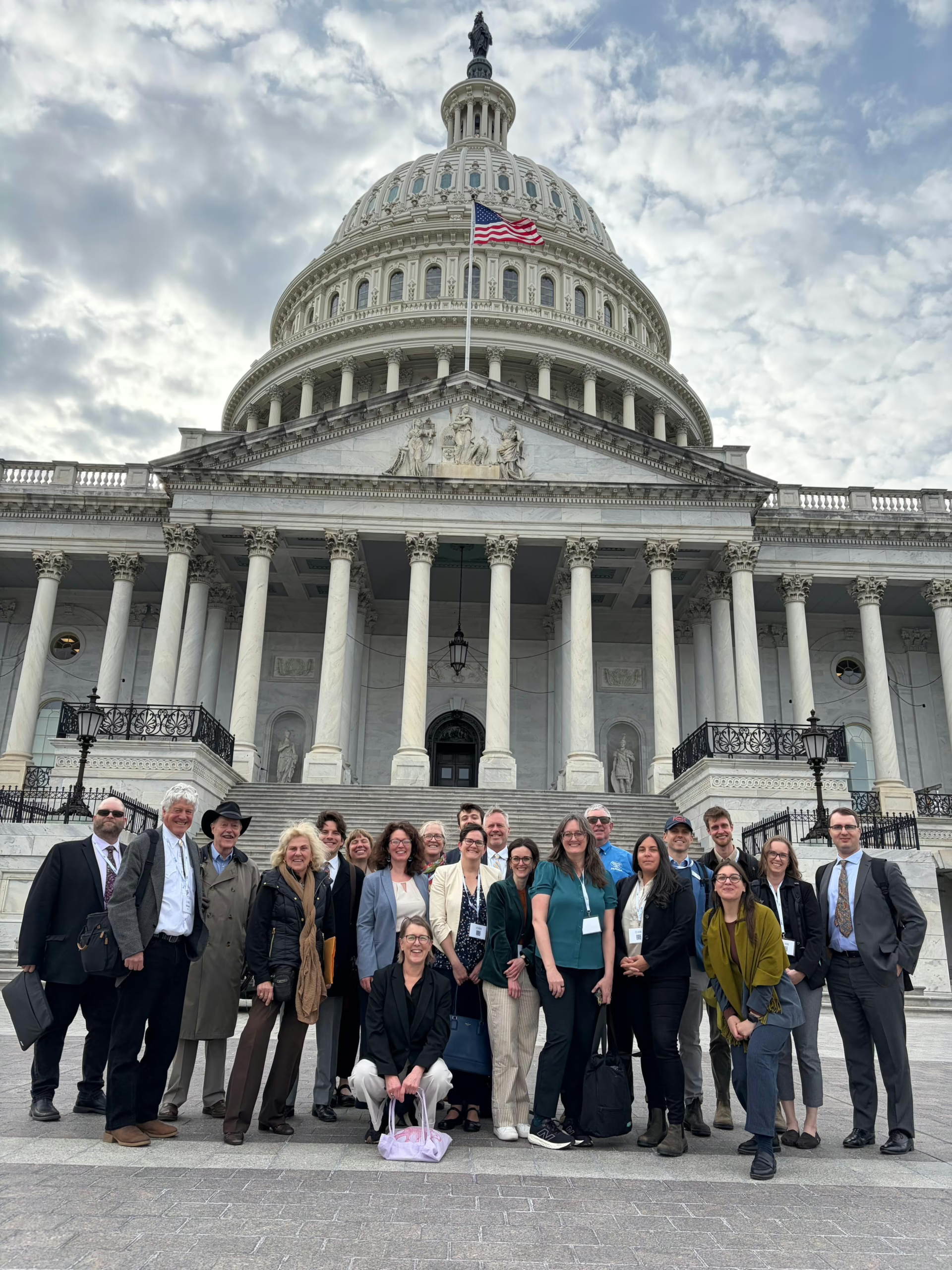
NOC organizes an annual “fly-in” where farmers and representatives from member organizations gather in Washington, D.C. to meet with Congressional offices to advocate for policies that support organic farmers and the organic industry. NOFA/Mass Policy Coordinator Randy Violette had the opportunity to attend the 2026 fly-in a few weeks ago as both a staff member of NOFA/Mass and a farmworker on a certified organic vegetable farm in Western Mass.
The group of advocates participating in the fly-in represented 15 states and 22 organic farms, organic retailers/processors, and organizations. Splitting into small groups, the coalition met with 42 congressional offices in one day on the Hill, advocating primarily for the following priorities:
-
Increase funding and staffing for the USDA National Organic Program (NOP) to stop fraud and maintain consumer trust
-
Bolster the National Organic Certification Cost Share Program (NOCCSP) to support U.S. organic farmers and encourage domestic production
-
Strengthen investment in organic research and innovation to equip organic farmers with the tools and knowledge they need to remain competitive
-
Expand organic dairy and market data to support organic dairy farm viability
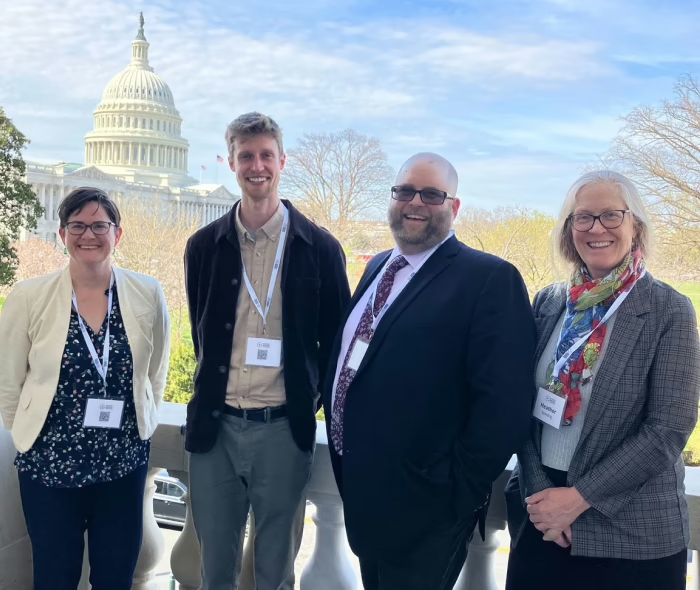
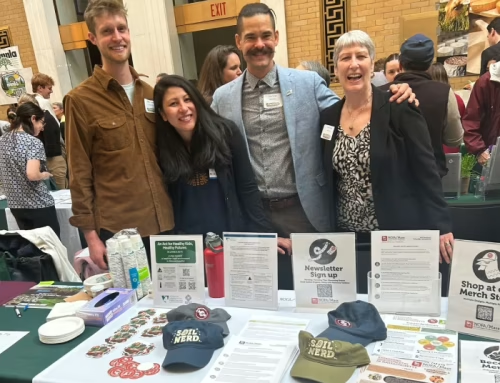
Our Policy Coordinator, Randy Violette (second from left) at the D.C. Fly-in
Two days after the Hill visit, the group also met with various administrators at USDA. Advocates first met with the Chief of Staff for the USDA Under Secretary of Marketing and Regulatory Programs, as well as leaders from the Agricultural Marketing Service and NOP. During this meeting, the group expressed concerns about NOP staffing losses, reemphasized the importance of strong organic regulations, and discussed matters relevant to the National Organic Standards Board (NOSB). Following this, the final meeting of the fly-in was with two administrators at the Farm Service Agency (FSA) to bring their attention to the slow disbursement of organic certification cost-share funding.
This point about organic certification cost-share was particularly resonant with administrators and legislative offices. Most offices also shared concerns about USDA staffing losses, SNAP cuts, and the impact of tariffs and the Iran war on organic farmers and the organic industry. The fly-in group left Washington with several ideas about how to advance NOC’s priorities and now return to their respective states to continue mobilizing farmers, consumers, and other stakeholders to ensure the longevity of a strong organic industry.
That’s all for this edition! There’s a lot of action at the state level right now, and we’ll provide a robust update next month. In the meantime, enjoy this lovely spring weather!
Happy seeding,
The NOFA/Mass Policy Team