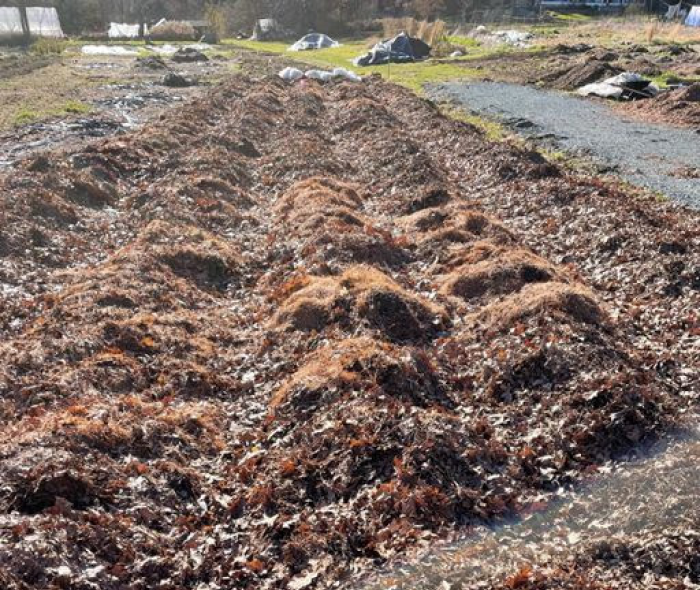
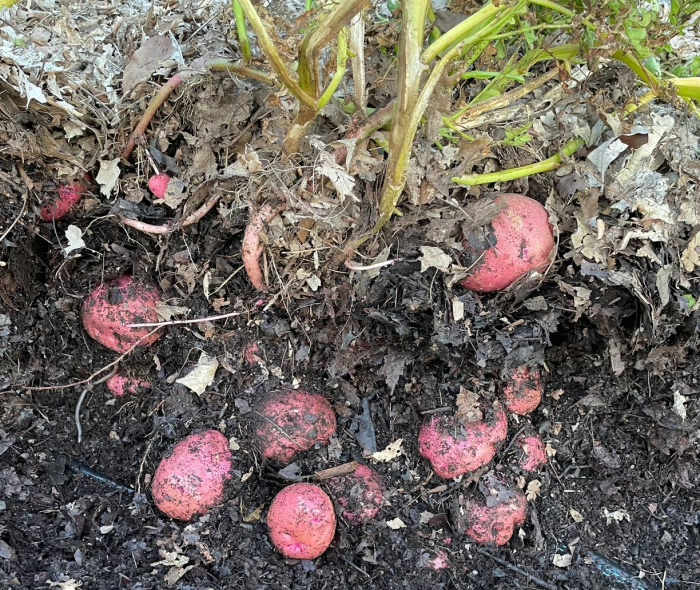
“No bare soil” is a good mantra for both gardeners and farmers, to preserve soil organic matter and promote soil health. Cover cropping is one way to keep the soil covered over the winter, but for many gardeners and small farmers, I recommend using a thick layer of leaves instead. I’ve been using leaves on the farm for a decade, and I’m thrilled with the benefits I’ve seen.
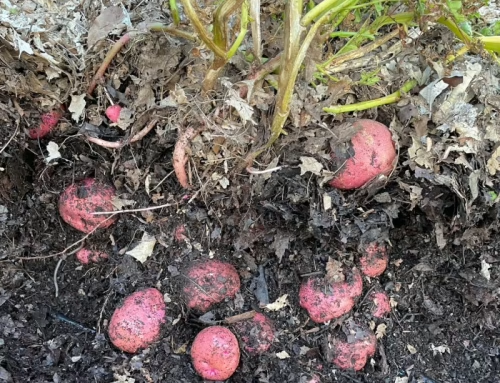
Leaves do several wonderful things for your garden. Besides keeping it covered for the winter, they break down slowly, feeding soil life and providing a rich, slow-release fertilizer all summer long. They are a seed-free mulch that will keep most annual weeds at bay without weeding. And they are free and plentiful.
Leaves do present some challenges as well. Like any mulch, they increase soil moisture at the soil-mulch interface, which is perfect for slugs. Reducing irrigation can help. They will blow around a bit, although almost all of them will stay exactly where you put them once they get wet and settle in. And they can tumble into your planting rows, mulching your seeds and small transplants, so you may need to rake them away from your beds at planting time.
You can collect your own leaves and use them as is, or ask a landscaper to drop off a load (most will be happy to, as they must pay to dump them at composting facilities). As an added bonus, their leaves get lightly chopped when they collect them, making them less likely to blow around.
I always specify the load must be leaves only—no grass clippings and no garden waste. But I never worry about what type of leaves—oak, ash, maple, and pine will make up 99% of what I get, and all are just fine in the garden. Oak and pine have a bad reputation as too acidic, but it’s just not so, at least for soil with high organic content, which buffers any small pH changes from the leaves. I do try to avoid Chinese chestnut leaves, which will likely include spiny seed coats, and black walnut leaves in large quantities, which may suppress growth of some plants. Both are quite rare, in my experience.
The best tools I’ve found for moving leaves onto the garden are a three-prong pitchfork and a lightweight 5 or 6 cubic foot wheelbarrow. I aim for a 6”-8” covering on my growing beds, with a bit less in the paths, leaving some room for raking the bed leaves into the paths at planting time.