Policy & Advocacy Newsletter
As the days grow shorter and the air turns crisp, apple trees across Massachusetts hang heavy with fruit–a sweet reminder of how much we owe to pollinators. Their quiet work makes our fall harvests possible, from apples and pumpkins to the wildflowers still blooming in our fields. This season is a celebration of that abundance, and a chance to reflect on how we can help sustain it.
One of the greatest threats to pollinator health today comes from a source many people never see: seeds coated with neonicotinoids, or “neonics.” Neonics are a class of systemic insecticides derived from nicotine. Instead of being sprayed on crops like many other insecticides or pesticides, neonics are often applied directly to seeds as a seed coating. Once planted, the chemical is absorbed by and spreads throughout the growing plant, making every part–leaves, nectar, pollen, etc–toxic to insects. These broad-spectrum insecticides affect all insects that feed on affected plants and have been strongly linked to declining pollinator populations.
Pollinators are in Trouble
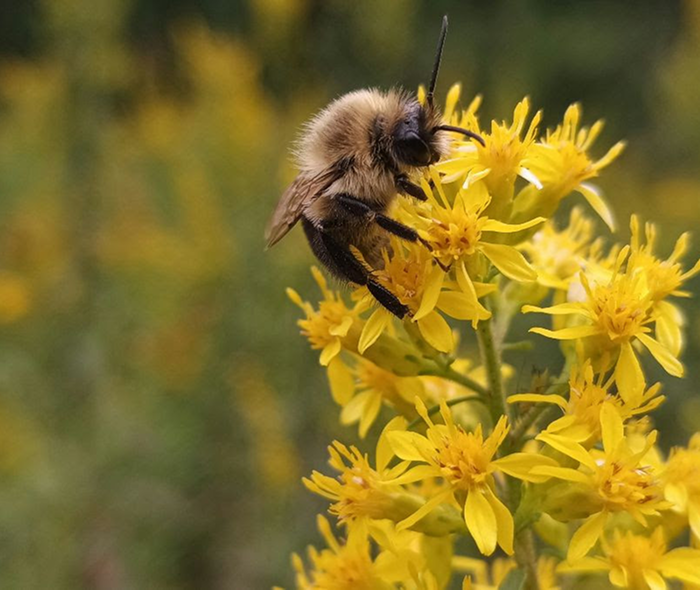
A third of America’s native bumble bee species are in decline. During the 2023–2024 season, U.S. beekeepers reported losing more than 50% of hives, and Massachusetts beekeepers lost about a third of their colonies. One major driver of pollinator declines is the widespread use of these neonic pesticides, particularly for treated seed coatings.
Neonics are particularly harmful to bees–exposure to them weakens bees’ immune systems, disrupts navigation abilities, and contributes to colony loss. Less than 5% of the active chemicals in seed coatings are absorbed by the plant, yet trace amounts have been identified as dangerous to bees and other insects. Additionally, the remaining 95% disperses into the surrounding soil, air, and water, persisting for months or even years. Research shows that bees are exposed to neonics through wild plants long after treated crops have finished flowering, and that residues in wild plant pollen and nectar are high enough to impair pollinator health.
Furthermore, independent studies—including Cornell University’s Neonic Report—show that neonic seed treatments don’t provide consistent yield or economic benefits in our region. Other states, such as Vermont and New York, have already taken action. It’s time for Massachusetts to do the same.
Support the Pollinator Protection Act
NOFA/Mass is supporting one priority bill pertaining to neonics this session–the Pollinator Protection Act (H.1041/S.587). This legislation will take a major step to safeguard pollinators by phasing out crop seeds coated with neonics, one of the largest and most persistent sources of these insecticides.
This bill will:
-
Restrict the use of neonic-treated corn, wheat, and soybean seeds by 2029, allowing their use only when they are the least toxic option for a proven pest problem.
-
Reduce a major source of neonic pollution, protecting bees, butterflies, and other vital pollinators.
-
Give farmers a fair transition period and access to safer seeds without added costs.
Pollinators like bees and butterflies are essential to Massachusetts farms, gardens, and ecosystems. Yet they are in steep decline, threatening the resilience of our food supply and the health of our environment. The Pollinator Protection Act is now before the legislature, with a public hearing scheduled for October 27th.
Our top need right now is constituent testimony. Legislators pay close attention to the voices of people they represent. Sharing why pollinators matter to you, your family, or your community can make the difference in whether this bill moves forward. We are especially seeking farmers and beekeepers willing to provide written or live testimony–your firsthand experience with pollinators and crop health is invaluable.
How You Can Help:
-
Submit testimony to the Joint Committee on Environment and Natural Resources in support of H.1041/S.587 (written or live, in Boston or online at the Oct. 27 hearing). We’re happy to guide you through the process.
-
Take quick action online: personalize and send the Xerces Society’s click-and-send message to your legislators.
-
Connect with us: we’re building a broad coalition of residents, farmers, and organizations—your voice makes a difference.
If you’re interested in providing testimony or building with the campaign, please get in touch with Rosemary Malfi, Director of Conservation Policy at the Xerces Society for Invertebrate Conservation: rosemary.malfi@xerces.org. The NOFA/Mass policy team can also help you develop testimony or answer questions at policy@nofamass.dreamhosters.com.
Together, we can reduce unnecessary pesticide use, protect pollinators, and protect the resilience and diversity of our crops that depend on them.