Policy & Advocacy Newsletter
On Tuesday August 19th, NOFA/Mass hosted an online Farmer Listening Session to gather farmer testimony on federal farm bill programs. With Congress expected to move quickly on a new farm bill after the August recess, this is an opportunity for farmers to share how USDA programs support their operations—and how recent cuts to grant programs and USDA staffing have affected them.
OBBBA’s Implications for Farmers and Food Access
While farmers were busy harvesting the first big flush of summer crops, much of the early summer news cycle was dominated by President Trump’s top legislative priority: the One Big Beautiful Bill Act (OBBBA). The bill’s passage was contentious, with far-reaching consequences for federal food and agriculture policy.
OBBBA was passed as a budget reconciliation bill—a special process that allows budget-related legislation to pass the Senate with a simple majority, bypassing the usual 60-vote threshold. Originally intended for deficit reduction, reconciliation has increasingly been used by presidents with slim Senate majorities to pass major priorities without bipartisan support.
Reconciliation rules require that new spending be offset by cuts elsewhere. To pay for President Trump’s priorities–most notably a continuation of the 2017 tax cuts–Republicans cut deeply into two programs they have targeted for decades: the Supplemental Nutrition Assistance Program (SNAP) and Medicaid (we won’t be focusing on the implications for Medicaid in this article, but you can find more reporting from KFF).
OBBBA cuts $185.9 billion from SNAP over the next 10 years, a 20% reduction, which will eliminate food aid for more than 2 million current recipients nationwide. The national network of food banks will be under pressure to fill this gap, but they would need to double the size of their operations to close the gap SNAP leaves behind, even after having their own funding reduced earlier this year.
The bill also makes a fundamental change to SNAP’s financing structure. States have always shared administrative costs, but they will now be required to cover up to 75% of administrative costs and will pay a share of the benefit costs for the first time. That share will be tied to each state’s “payment error rate”–often caused by paperwork or processing issues. If states are unable to reduce their error rate or are unwilling to cover the additional costs, they will have the option to reduce program eligibility or withdraw from the program entirely.
OBBBA also adds new work requirements for certain recipients. This provision follows from longtime conservative rhetoric attempting to portray SNAP recipients as lazy individuals who are just looking for handouts. However, USDA point-in-time estimates overstate joblessness among SNAP participants. Additionally, research shows that work requirements do not increase employment. Other OBBBA provisions further limit eligibility for some noncitizens and cap future increases to the Thrifty Food Plan, which determines benefit levels based on costs of living. Analysts estimate these changes could result in 22 million families losing some or all of their monthly SNAP benefits.
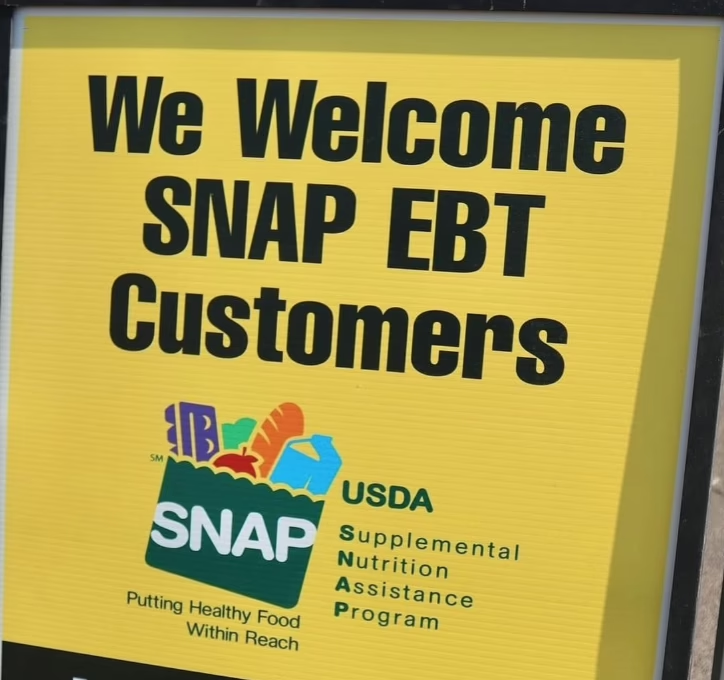
SNAP cuts will affect farmers who sell to SNAP or HIP customers, reducing local food access and sales. But OBBBA also contains other farm-specific provisions. Funding cuts to SNAP cleared the way for a $65 billion package heavily weighted toward commodity agriculture:
-
$59 billion for core farm safety net programs, including Agriculture Risk Coverage (ARC), Price Loss Coverage (PLC), and crop insurance.
-
Statutory reference prices for major commodities increased by 11–21%.
-
Updated base acres and increased annual commodity payment limits to $155,000, indexed to inflation.
-
Inflation Reduction Act conservation funds redirected to general conservation programs, without climate-specific guardrails
In sum, OBBBA is friendly to agribusiness and commodity farming interests at the expense of millions of Americans who will see a loss or reduction of their SNAP benefits.
So if OBBBA contained several key food and agriculture provisions, what’s next for the farm bill? Conversations to renew the farm bill have been taking place since 2022, and the current (2018) farm bill has been extended for nearly two years beyond its original timeframe. In large part, the lack of progress toward a new farm bill has been due to partisan gridlock. Democrats typically prioritize nutrition programs, small farms, and conservation programs while Republicans focus on the farm safety net through commodity payments, crop insurance, and more. Because the farm bill contains differing priorities for each party, it has historically required compromise. However, OBBBA broke from this precedent and circumvented the typical farm bill process. Republicans’ use of the reconciliation bill to advance longstanding goals–cutting SNAP and expanding commodity subsidies, among others–was viewed by Democrats as a blow to bipartisan farm bill talks. Though the farm bill process has its flaws, it has historically represented a rare example of bipartisan compromise in today’s polarized political climate.
Congress just departed for the August recess, but House Agriculture Committee Chair GT Thompson (R-PA) has indicated that he plans to move forward with a farm bill this year. Some are calling it a “skinny” or “hollow” farm bill, given that several major titles were already addressed by OBBBA. This potential farm bill would cover agriculture programs left out of the reconciliation package, including research, marketing, and certain conservation programs, as well as many other programs that remain under the lapsed 2018 farm bill. Unlike reconciliation, a new farm bill will require 60 Senate votes, meaning Republicans will have to win over some Democratic support. A big question looms–Will Democrats have the appetite to cooperate after such deep cuts to SNAP?
Happy Harvesting,
The NOFA/Mass Policy Team