Be a Better Grower Newsletter
by Laura Davis, NOFA/Mass Soil Health Technical Advisor, Certification Coordinator & TOPP Mentor Coordinator
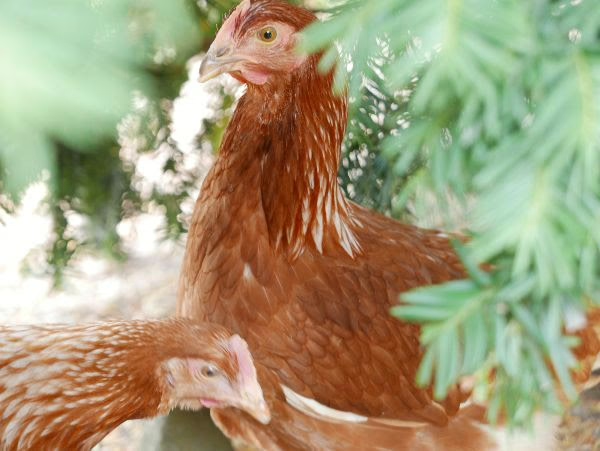
Foraging chickens by Lisa Gilardi
I remember more than a decade ago, NOFA/Mass hosted workshops on pastured poultry, featuring then-novel chicken tractors with Harvey Ussery, Joel Salatin, and local organic farmers Julie Rawson and Jack Kittredge. This particular technique of raising chickens and turkeys used a “chicken tractor,” or movable pasture shelter that farmers rotate through fields, often on a daily basis. This process gives chickens access to pasture grass, worms, seeds, and other bugs they like to eat. Rotating pastures can also help to grow healthier birds, fertilize pastures, and even reduce the labor costs associated with maintaining indoor poultry facilities. In employing chicken tractors, many farmers have found raising poultry for meat or eggs to be a sound enterprise for their farm. This technique of pastured poultry has become standard practice in the Northeast.
For those of you who have tried to raise poultry, you’re probably well aware of the bottleneck introduced in the supply chain when it comes to processing. In some cases, farms will process small flocks on farm. Farms that raise larger flocks for market though, have few choices for processing – and still fewer choices for organic-certified processing.
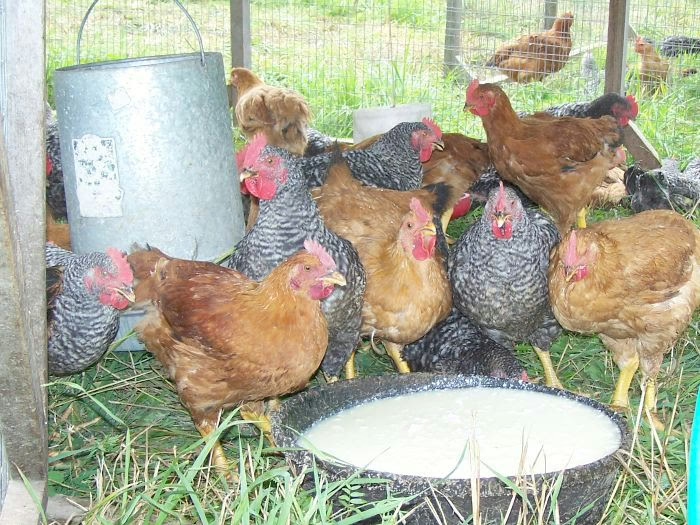
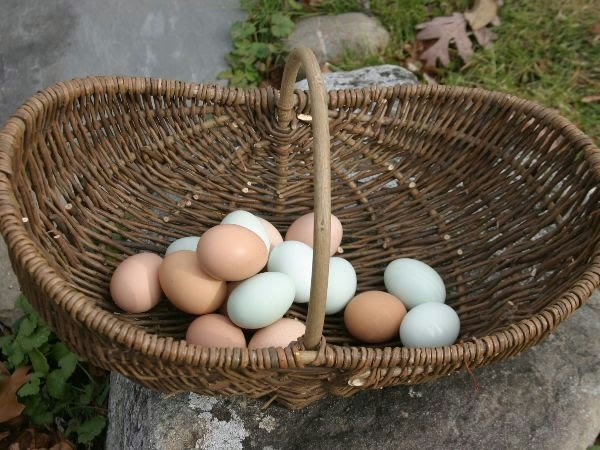
Jack and Julie’s chicken and eggs
Massachusetts, Connecticut and Rhode Island farmers who are interested in certifying their poultry meat to organic standards have faced barriers in getting their product to market, since the standards require birds to be processed in a USDA-certified organic processing facility, and none exist in these states for poultry. Reed Farm in Sunderland, MA is currently working towards a USDA Grant of Inspection and processes to process poultry for sale in MA. There are two USDA-certified organic meat processing facilities: Adams Farm in Athol and Meatworks in Westport, MA, but neither processes poultry. Farmers who wish to organically certify their poultry must travel to Vermont or New Jersey, an inconvenient and costly path to supply organic poultry to their customers. Now there is a new facility recently approved to process organic poultry in Bethlehem, CT.
CT NOFA and NOFA/Mass have been working with Steadfast Farms, in Bethlehem, CT, to assist in the process of certifying their facility as organic. As partners in the Transition To Organic Partnership Program (TOPP), hosted by the USDA, these NOFA chapters are working with TOPP to give technical assistance to farmers and food processors to help them navigate the organic certification process. As of June 5, 2025, this facility is now ready to process certified organic poultry.
With this barrier lifted, TOPP transitioning farmers in the region can see a clearer path to organic-certified poultry production. If you are interested in organic poultry processing, please reach out to Steadfast Farms at steadfastpps@gmail.com or (860) 302-7847.
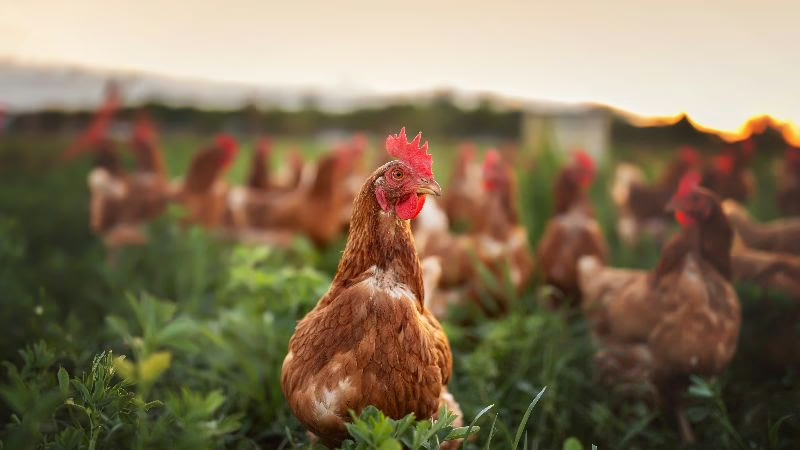
Happy free range chicken in the meadow by Jacqueline Anders
Updates in Organic Standards for Poultry
You may be aware that the National Organic Program approved the Organic Livestock and Poultry Standards (OLPS) Final Rule. This new rule was required to address several inconsistencies in organic livestock production and varied interpretation of the rule by producers and certifiers. Additional detail in the new rule will apply the organic livestock regulations more consistently, ensuring fair competition between producers and bolstering consumer confidence in the organic label. This was more than a decade in the making and went into effect January 2, 2024 and required compliance for most organic poultry producers by January 2, 2025. As it pertains to poultry:
-
OLPS sets specific space and stocking density requirements for
both indoor and outdoor spaces.
-
Poultry must have year-round outdoor access and may only be
confined temporarily in limited situations.
-
Porches are prohibited for use as outdoor space.
-
Requires weekly monitoring of ammonia in indoor spaces.
If you are a farmer that is interested in organic poultry for meat or eggs, NOFA/Mass is here to assist you with your Organic System Plan ensuring compliance to these rules.
The Transition to Organic Partnership Program (TOPP) is continuing to match experienced organic farmers to farmers that want to transition to organic crops, livestock and processing. We will match mentors with transitioning farmers again in September 2025 for a one-year mentorship and again in March 2026 for a 9-month mentorship.
The USDA will cease funding TOPP at the end of 2026. We look forward to working with you for the remainder of this successful program. If you are interested in being a paid mentor or would like to transition your farm, follow the link to learn more and sign up!
|
|