Be a Better Grower Newsletter

By Laura Davis

NOFA/Mass Soil Health Technical Advisor, Certification Coordinator & TOPP Mentor Coordinator
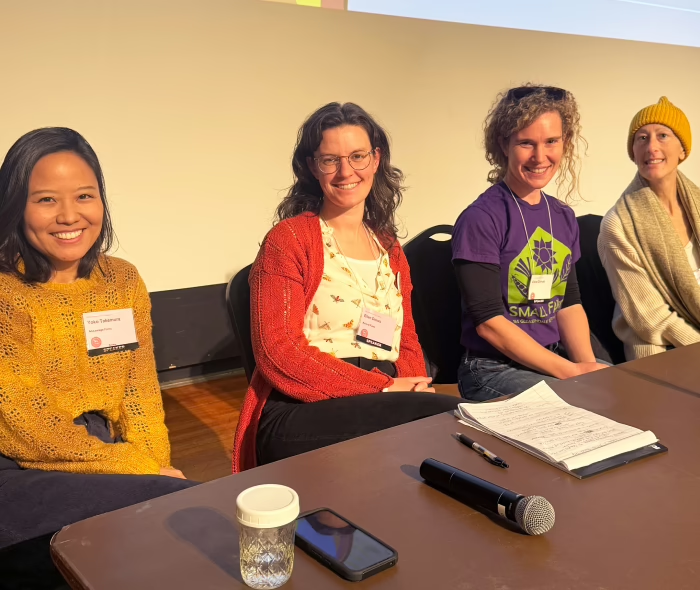
A group of four farmers at a conference table in front of a projector screen.

No-Till Farm Panel at the Winter Conference. From Left to right:


Yoko Takemura, Co-Owner, 
Assawaga Farm

Ellen Drews, Farm Manager, Astarte Farm 

Elena Colman, Farmer-owner, Small Farm

Anna Kelchlin, Farm Owner, Late Bloom Farm

Highlighting Women Farmers Using No-Till Practices

For those who missed the NOFA/Mass Winter Conference, “Healthy Soils in Action”,  on February 28, 2026 at UMASS Amherst, I wanted to highlight the panel of women who gathered for “Voices from the Field: Northeast Women Leading the No-Till Revolution”, facilitated by our Policy Coordinator, Randy Violette. We will include the link to the recording in next month’s newsletter.

Each panelist had numerous years of farming experience prior to managing and owning their own farms. Clearly spent years working toward that goal by working for other farms, visiting other farms and attending no-till workshops.

So why were these women drawn to no-till practices? Ellen Drews, who managed Astarte farm, had experienced major crop losses due to flooding at a previous farm and saw no-till as a practice that could increase water infiltration. She had visited Frith Farm in Maine and saw how healthy the crops were after years of no-till management. Yoko Takemura had been impressed by the lack of weeds and how vibrant the vegetables were at no-till author Bryan O’Hara’s Tobacco Road Farm in CT. Anna Kelchlin loved being closer to the earth and plants on foot rather than operating a tractor all her days. She also was inspired by Assawaga Farm, among others. Elena Colman’s goal on their new land was to increase organic matter from 5% to 7% from the start. As the year-round farm grew, they found that some minimal tillage allowed for more crops. They still employ no-till practices to enhance soil health. All of these farmers had their foundational experience in traditional tillage practices and saw the benefits that other farms were experiencing with no or low tillage.

Most of these farms started their no-till practice by making permanent beds with enough compost to cover weed seeds. Each panelist admitted that this was a large amount of work, but the result was that farm labor could be utilized for other work, rather than weeding. Elliot Coleman’s comment in one of his books that weeding is more than half of the work of an organic farmer, and he was not kidding! No-till gives some of that time back for focus on other farm tasks.

Many of the panelists’ farms use silage tarps, which enable crop residue, cover crops and weeds to die down, leaving a clean bed to plant into. Ellen Drews noted that perennial weeds started to take over after a period of not tilling, citing a case where light tillage for the whole farm could remedy that situation. Panelists also discussed using broadforks and spaders for aerating soil or after amendments were put down, and mentioned that having green plants in the bed for as long as possible was critical. If green plants could not be present, then natural mulches were used to cover the beds.

A couple particular no-till successes that struck me were the reduction of puddles or muddy pathways that these farmers experienced after a few years using these practices, and the high rate of plant survival during drought.

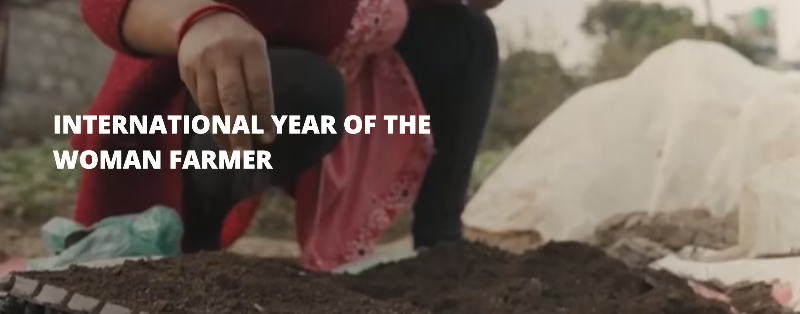
Image with text and a woman kneeling above soil.

As designated by the United Nations, 2026 is the International Year of the Woman Farmer, and so it is with pleasure that I lift these women farmers up. According to the UN, about ⅓ of the farms in the world are operated by women. I am proud to report that in Massachusetts and in other New England states, more than 40% of farms are operated by women. The Year of the Woman Farmer is meant to empower the women transforming the food system. This group of organic farmers are leading with stewardship of the land, feeding families, and growing nutritious food for their communities.

The first no-till workshop that NOFA/Mass hosted in 2015 featured Bryan O’Hara from Tobacco Road Farm in Lebanon, CT, an early inspiration to no-till panelist Yoko Takemura. He had farmed intensive vegetables for 20 years using tillage and was constantly seeking ways to improve soil fertility. Korean Natural Farming (KNF) was recommending no-till techniques. O’Hara built on those recommendations, developing a way to eliminate the preceding crops and their residues, achieve weed-free seed beds, increase biological activity and diversity, seed appropriately, and allow for better interseeding of crop and cover crops. Now, as I visit small farms around the Northeast, there are very few not utilizing no-till techniques: a revolution has taken hold.  No-till vegetable growing has gone mainstream, and I really enjoyed hearing these women speak about their farms and the nuances of their current practices.

Northeast Transition to Organic Partnership Program / TOPP / USDA Logo

Join our group of newsletter sponsors!

Learn more

Become a sponsor

Grow these resources

Donations of $10 or more qualify for NOFA/Mass Membership

Total Views: 321Daily Views: 2